
NEW BOOK • 2026

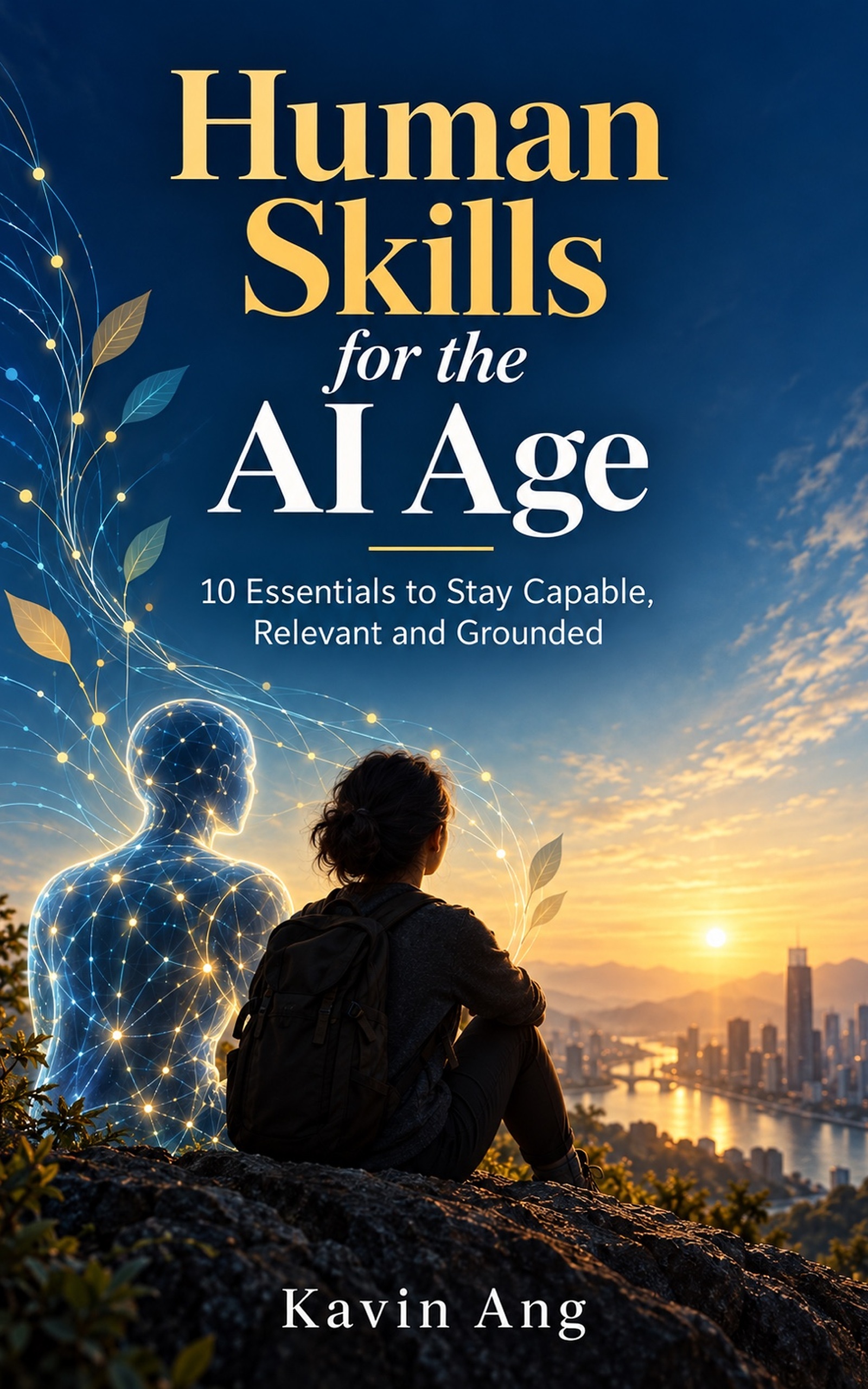
HUMAN SKILLS FOR THE AI AGE

10 Essentials to Stay Capable, Relevant and Grounded

You do not need to become an AI expert to stay relevant. You need to strengthen the human skills that help you learn, think, ask better questions, judge, create, communicate, connect, adapt, recover and choose well as technology changes around you.

A concise, practical guide for experienced adults, lifelong learners, career changers and anyone entering a new stage of life who wants to use AI confidently without losing their judgement, identity or sense of what matters.

LEARNTHINKASKJUDGECREATECOMMUNICATECONNECTADAPTRECOVERCHOOSE
By Kavin Ang • Kindle available now
Human Skills for the AI Age: 10 Essentials to Stay Capable, Relevant and Grounded by Kavin Ang
Kavin’s earlier Play Smart books continue below. Kavin's earlier books explore discipline, control and better decisions in recreational slot play.
VIEW PLAY SMART BOOKS
THE PLAY SMART JOURNEY

PLAY SMART.

A practical philosophy for making better decisions when money, risk and emotion come together.

Play Smart begins with the mindset — understanding how we think, react and make decisions. It then moves into the practical approach — putting that mindset into action with greater awareness, discipline and control.

🧠

RIGHT MINDSET

Build the right mindset before you spin.

💼

MONEY MANAGEMENT

Control your money so it doesn't control you.

🛡️

PLAY WITH CONTROL

Set limits, stick to your plan, and play within them.

🎰

PLAY SMART STRATEGIES

Practical strategies to help you play wisely.

♡

PLAY FOR FUN

At the end of the day, it's about entertainment.

BOOK 1

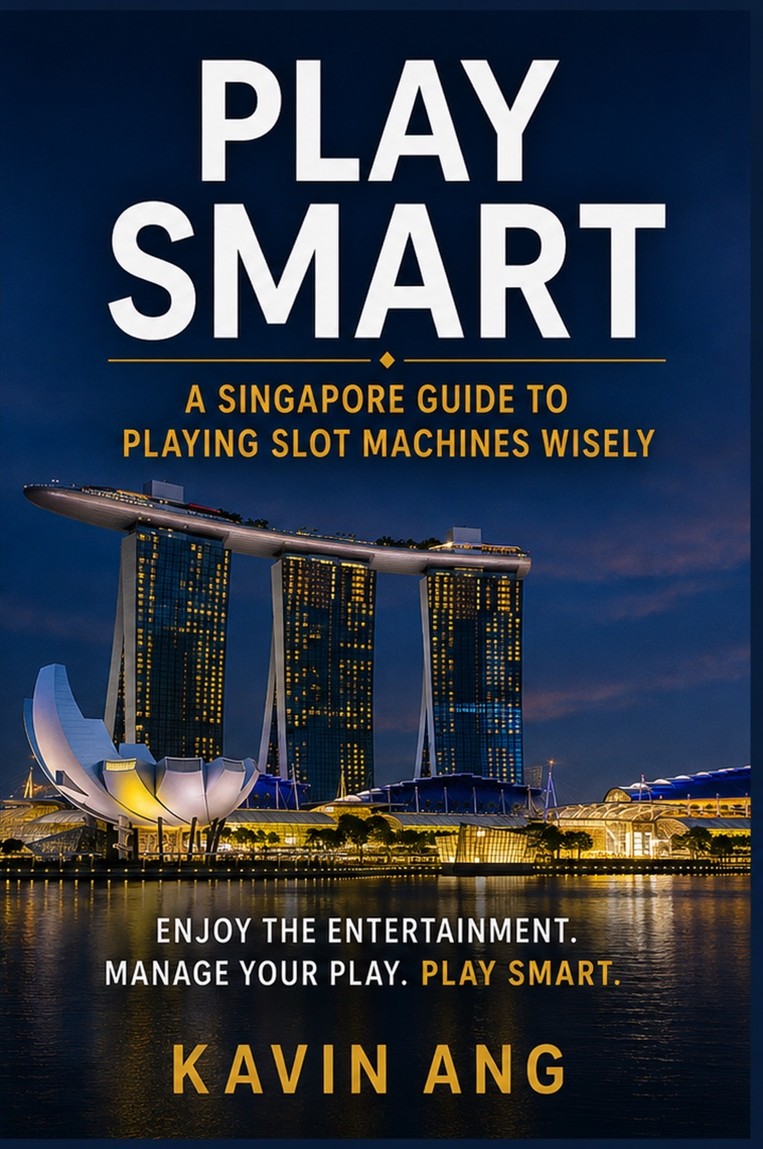
PLAY SMART: A SINGAPORE GUIDE TO PLAYING SLOT MACHINES WISELY

The foundation of the Play Smart approach — knowledge, discipline and staying in control.

Play Smart: A Singapore Guide to Playing Slot Machines Wisely front cover by Kavin Ang

WHAT YOU'LL FIND INSIDE

A practical guide for recreational players who want to enjoy slot machines wisely and responsibly, based on knowledge, personal experience, observation and disciplined play.

  • Understand how slot machines work and why every spin is random.
  • Build the right mindset and manage your bankroll wisely.
  • Understand the psychology behind slot play and emotional decisions.
  • Explore the Singapore slot-machine landscape and practical play considerations.
  • Learn practical strategies, common mistakes to avoid and how to play responsibly.
BOOK 2 — NOW AVAILABLE

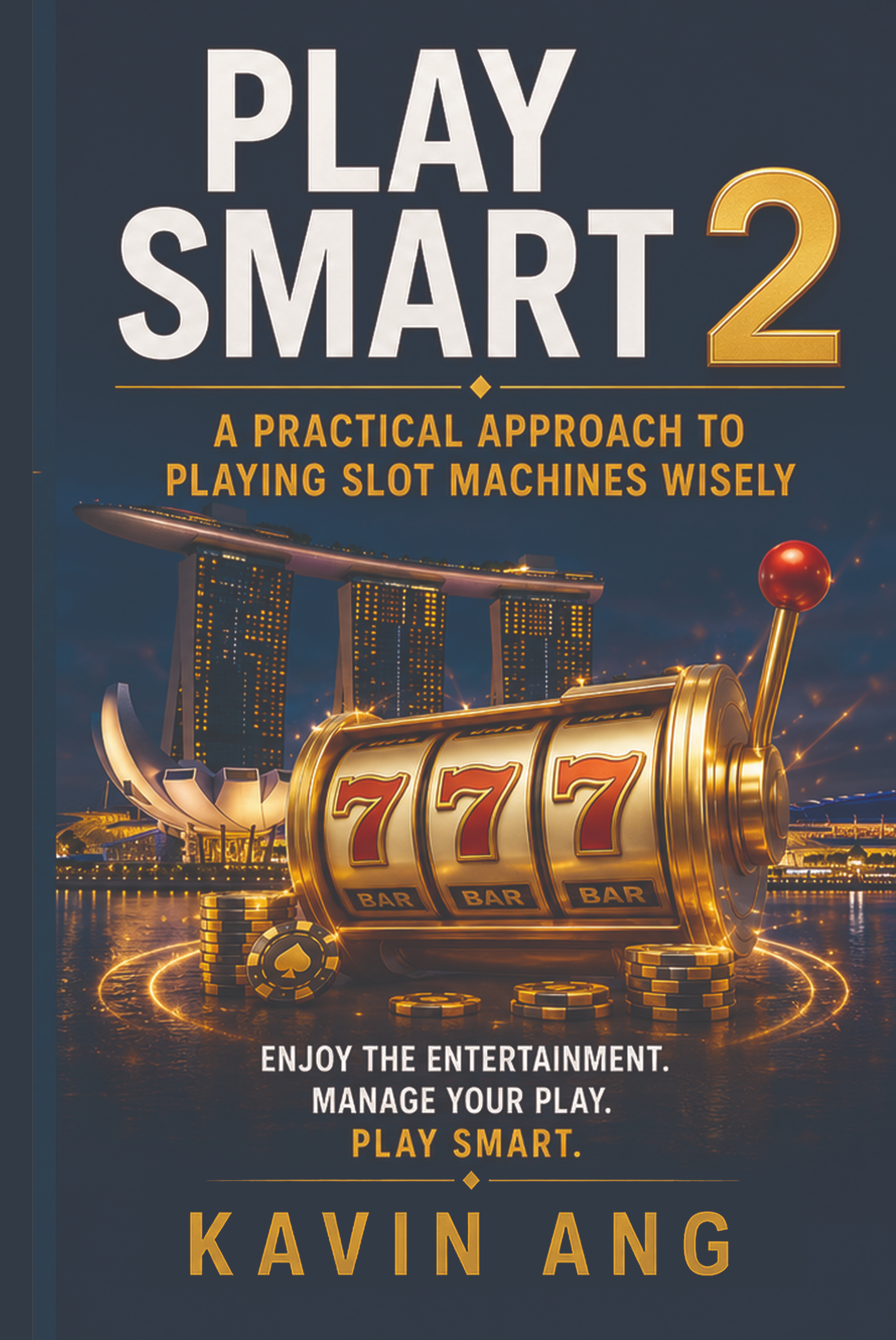
PLAY SMART 2: A PRACTICAL APPROACH TO PLAYING SLOT MACHINES WISELY

The next step in the Play Smart journey — turning disciplined principles into a practical approach to managing your play.

Play Smart 2: A Practical Approach to Playing Slot Machines Wisely front cover by Kavin Ang

WHAT YOU'LL FIND INSIDE

Book 2 develops the practical methodology for putting the Play Smart principles into practice, with a stronger focus on bankroll control, protecting winnings and knowing when to walk away.

  • Work with a defined bankroll and clear boundaries before you play.
  • Use observation and deliberate decisions rather than chasing patterns or predictions.
  • Understand The Play Smart Profit Securing Rule and its role as a money-management decision.
  • Learn how to establish a walk-away level and protect part of a winning position.
  • Apply the ideas through practical examples, session planning and disciplined decision-making.

ARTICLES & REFLECTIONS

Practical reflections from Kavin on better decisions, Human Skills for the AI Age, learning and adapting, along with the original Play Smart lessons on discipline and staying in control.

EXPLORE THE ARTICLES

Ideas for a Changing World

Practical reflections on Human Skills, AI, learning, better decisions and the original Play Smart lessons on discipline and staying in control. More topics will be added as the journey grows.

Play Smart: Why I Changed the Way I Play Slot Machines

A personal reflection on losses, budgeting, discipline and changing the mindset from winning to entertainment.

READ ARTICLE

Don't Just Set a Budget — Know When to Walk Away

Why a budget is only the beginning, and why having boundaries around a playing session matters.

READ ARTICLE

The Psychology of the Slot Machine: Why We Keep Spinning

Why excitement, losses and near-misses can influence our decisions — and why the smartest thing we can control is ourselves.

READ ARTICLE

Is the Slot Machine “Due”?

A simple look at randomness, the “due” myth and what slot players can actually understand and control.

READ ARTICLE

You Don’t Need to Become an AI Expert to Stay Relevant

Why staying curious, capable and willing to learn matters more than becoming a technical AI specialist.

READ ARTICLE

AI Can Give You an Answer — But Should You Trust It?

Why verification, human judgement and keeping your own thinking active still matter in the AI age.

READ ARTICLE

Play Smart: Why I Changed the Way I Play Slot Machines

I've been playing slot machines at MBS since 2022, and along the way I've had my fair share of wins and losses.

If I'm being honest, I would say the losses will happen more often than the wins over time. That's something I have come to accept from my own experience.

When I Don't Start With a Plan

I've also learnt that when I start playing without setting a budget, things can quickly get out of hand.

You become focused on the machine, the next spin and the possibility of winning. Before you realise it, you've lost track of how much you've already put into the machine.

When I start with a budget, at least I have a number in my mind telling me when I should stop.

That doesn't mean I will always have perfect discipline. I won't. There will be times when emotions take over and I continue beyond the amount I originally planned.

But having a budget creates a boundary. It gives me a clear reference point and reminds me that I came to the casino with a limit.

The Casino Makes Discipline Difficult

This is easier said than done when you're actually inside the casino.

There are so many machines to choose from. When one isn't doing well, another machine may look more attractive. When you're winning, you may feel that the next spin could bring an even bigger win.

That's where discipline really matters.

For me, Play Smart isn't about finding a secret formula that guarantees a win. There isn't one.

It's about managing the money I'm prepared to spend and managing my own behaviour.

Accepting the Reality of the Game

You might have a winning session. You might have a losing session. Sometimes you can be lucky and sometimes you simply aren't.

But if you continue putting money into the machines over the long run, the house has the advantage.

That's why I've gradually changed the way I look at going to the casino.

From Winning to Entertainment

Instead of thinking that I must win money every time I go to the casino, I try to think of the experience as entertainment.

I'm paying for an experience. I'm setting aside money that I can afford to spend, and I'm there to enjoy myself.

That change in mindset makes a big difference.

If I win, that's a bonus.

If I lose within the amount I planned, I've paid for my entertainment and I walk away.

The goal isn't to beat the machine. The goal is to stay in control of myself.

Play Smart Takeaway
Set a budget before you play. Accept that losses are part of the experience. Most importantly, treat the casino as entertainment — not as a way to make money.

Don't Just Set a Budget — Know When to Walk Away

One thing I've learnt from my years of playing slot machines is that setting a budget is important, but knowing when to walk away is just as important.

When I go to the casino, I think about my money at two levels.

Start With Your Overall Budget

Before I even start playing, I decide how much I'm prepared to spend for the entire casino trip.

For example, I might set an overall budget of $1,000.

That $1,000 is my limit for the trip. It's not money I'm prepared to keep topping up if things don't go my way.

Once I've reached my limit, I'm done.

But I don't put the entire amount into play at once.

Break Your Budget Into Smaller Allocations

I prefer to break my overall budget into smaller playing allocations rather than putting everything into play at one time.

As a simple example, I might allocate around 20% of my overall budget to a playing round.

The actual amount depends on the budget I'm comfortable with. The important thing is that I'm not putting my entire trip budget at risk at once.

I also find this gives me the opportunity to enjoy different machines. There are so many different slot machines, themes and features to explore.

For me, that's part of the entertainment.

But What Happens When You're Winning?

This is where things get interesting.

When a machine is treating you well, it's very easy to continue playing.

You might think:

“I'm lucky today. Let's play a little longer.”

I've experienced this myself.

And sometimes the hardest money to walk away from is the money you've just won.

A good run can quickly turn into a losing run if we continue playing without an exit plan.

That's why I've started thinking differently about winning.

Winning isn't just about how much you make. It's also about how much of that winning you are prepared to keep.

My Profit Securing Rule

I've developed my own Profit Securing Rule to help me with this.

The idea is simple.

When a playing round moves into a meaningful profit, I establish a point where I'm prepared to walk away rather than risk giving everything back to the machine.

I'm not saying this makes the machine more likely to pay.

It doesn't.

The odds remain the odds.

What it does is give me a decision point — rather than allowing the machine, excitement or emotions to decide when I stop.

That's an important difference.

The Profit Securing Rule will be explored in greater detail in Play Smart Book 2.

Know When the Session Is Over

I may have several playing rounds during a casino visit, but I want each round to have its own boundaries.

Once I've completed the rounds I planned for the day, I stop and look at the bigger picture.

How did I actually do today?

Did I stay within my overall budget?

Did I enjoy myself?

Did I remain disciplined?

Most importantly:

Did I stay in control?

Because for me, that's what Play Smart is really about.

Play Smart Takeaway
Set your budget before you play. Break it into manageable allocations. Have an exit plan before emotions take over. And when it's time to walk away — walk away.

The Psychology of the Slot Machine: Why We Keep Spinning

Have you ever told yourself:

“Just one more spin.”

Maybe you were winning and wanted to keep the good run going. Or perhaps you were losing and thought the next spin might finally turn things around.

That feeling is familiar to many slot players.

The interesting thing is that the machine doesn’t need to change for our behaviour to change. Our emotions can do that all by themselves.

The excitement of winning

Winning can be exciting.

After a good hit, it is easy to feel more confident. You may start believing that you’re playing particularly well or that the machine is treating you favourably.

But the machine hasn’t suddenly become predictable.

The excitement is real. The feeling is real.

The prediction isn’t.

That’s an important distinction.

What happens after a loss?

Losses can create a completely different emotional reaction.

You may start thinking:

“I’ve already lost this much. I need to win it back.”

This is where chasing losses can begin.

Instead of making a calm decision about whether you still want to play, the next spin becomes an attempt to repair the previous result.

And that can quickly change a session from entertainment into frustration.

The near-miss effect

Then there are those moments when you almost hit something.

Two matching symbols appear, and the third lands just beside them.

It can feel incredibly close.

But “almost” isn’t a win.

The outcome of the spin has already been determined by the game’s random process. The near-miss can create excitement, but it doesn’t mean the machine is getting closer to paying.

The smartest thing you can control

We cannot control the outcome of a spin.

We cannot make a random machine produce a particular result.

But we can control our decisions.

We can decide how much we’re prepared to spend.

We can recognise when emotions are influencing us.

We can accept a loss without automatically chasing it.

And we can enjoy a win without assuming another one is coming.

That, to me, is at the heart of playing smart.

You don’t need to control the machine. You need to control yourself.

Is the Slot Machine “Due”?

This is one of the most common questions a slot player can ask.

You’ve been watching a machine for a while. It hasn’t produced a major feature.

Someone says:

“This machine is due.”

Should you play it?

This is where understanding how slot machines work becomes important.

Random means random

A modern slot machine uses a Random Number Generator, or RNG, to determine the outcome of each spin.

That means the previous spin does not create an obligation for the next one.

A machine doesn’t think:

“I’ve lost five times, so I’d better give them a win now.”

It doesn’t work that way.

A long sequence without a particular result does not automatically mean that result is about to appear.

What about a machine that has just paid?

The opposite idea is common too.

Someone might say:

“Don’t play that one. It just hit a jackpot.”

Again, the previous result doesn’t determine the next spin.

A machine that has just produced a big win isn’t necessarily “cold”. And a machine that hasn’t produced one isn’t necessarily “hot”.

So what should you look at?

Instead of trying to predict the next spin, focus on things you can actually understand and control.

Know the game you’re playing.

Understand concepts such as RTP and volatility.

Know your own budget.

And most importantly, don’t turn a belief about what a machine should do into a reason to spend more money.

Book 1’s message is deliberately simple

There is no secret formula that makes a random machine predictable.

Play with knowledge, not assumptions.

Slot machines can be entertaining. They can also create very strong impressions — especially when we see patterns, near-misses or unusual sequences.

But an impression isn’t the same as evidence.

The smarter approach is to understand what the machine can and cannot tell you, then make your decisions based on what you can control.

That’s the Play Smart mindset.

Understand the machine. Understand yourself. And don’t confuse hope with prediction.

You Don’t Need to Become an AI Expert to Stay Relevant

AI is changing quickly, and that can make people feel they need to understand everything.

You don’t.

You do not need to become a programmer, data scientist or AI specialist to stay relevant. What matters more is being willing to learn how these tools can help you in your own life and work.

Start small.

Use AI to help you research a topic, organise your thoughts, improve your writing, learn something new or explore an idea.

The real advantage is not knowing everything about AI.

It is being curious enough to try, sensible enough to question the answer, and adaptable enough to keep learning as the technology changes.

AI will keep improving.

Your job is not to chase every new feature.

Your job is to stay capable, curious and willing to learn.

That is enough to keep moving forward.

AI Can Give You an Answer — But Should You Trust It?

One of the most impressive things about AI is how confidently it can answer a question.

That is also one of the reasons we need to be careful.

An AI response can sound polished, detailed and convincing — and still be wrong.

That means human judgement still matters.

When the information is important, check the source. Ask another question. Compare the answer with reliable information. If something does not sound right, investigate further.

AI is extremely useful for generating ideas, explaining concepts and helping us think through problems.

But it should not replace our responsibility to decide what we believe and what action we take.

A good habit is simple:

Use AI for assistance. Keep judgement for yourself.

The smarter AI becomes, the more important that habit may become.